Cleaning and Housework Statistics Ireland 2026: Time, Costs and Safety
Last updated: September 2026. Human compiled and fact checked against each named source.
Anyone looking for cleaning statistics for Ireland usually finds the numbers scattered across dense PDFs from half a dozen state bodies. This page gathers the key Irish figures in one place: how much time we spend on housework, what it costs to hire a cleaner, what households spend, how often cleaning products send people to the poisons centre, and what is at stake when a tenancy ends. Every figure links to its primary source, and anything we derived ourselves is labelled as calculated. Journalists, researchers and bloggers are welcome to cite any statistic on this page with a link back to it as the reference.
Key Cleaning Statistics for Ireland at a Glance
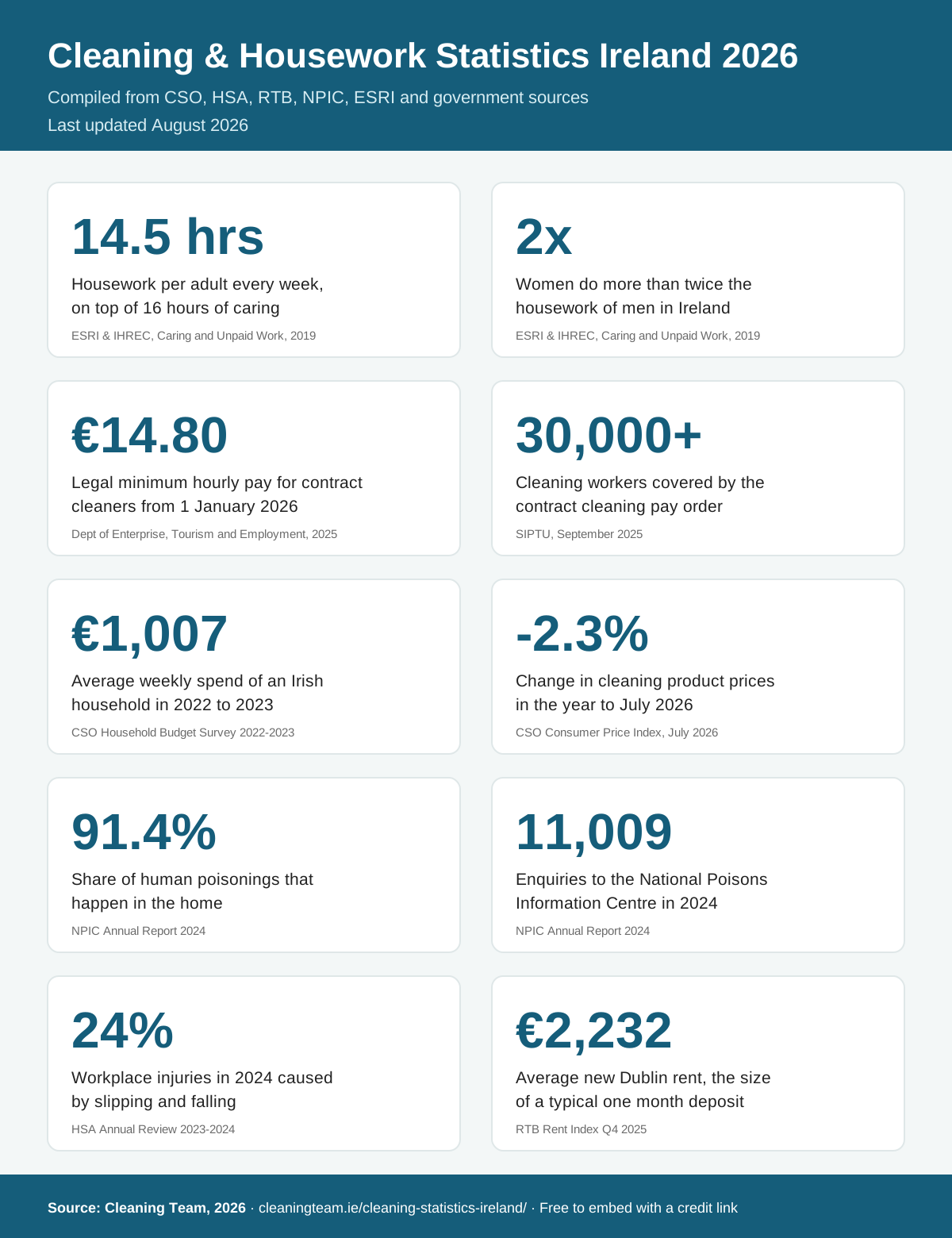
- Adults in Ireland spend an average of 14.5 hours a week on housework and a further 16 hours on caring. Source: ESRI and IHREC, Caring and Unpaid Work in Ireland, 2019
- Women in Ireland spend more than twice as much time on housework as men. Source: ESRI and IHREC, 2019
- The legal minimum pay for a contract cleaner in Ireland is €14.80 per hour from 1 January 2026. Source: Department of Enterprise, Tourism and Employment, September 2025
- More than 30,000 cleaning workers are covered by the Contract Cleaning Employment Regulation Order. Source: SIPTU, September 2025
- The average Irish household spent €1,007.47 per week in 2022 to 2023, up 20.3% on 2015 to 2016. Source: CSO Household Budget Survey 2022-2023
- Household cleaning and maintenance products were 2.3% cheaper in July 2026 than a year earlier, while paid domestic services rose 2.0%. Source: CSO Consumer Price Index, July 2026
- The National Poisons Information Centre answered 11,009 enquiries in 2024, and 91.4% of human poisonings happened in the home. Source: NPIC Annual Report 2024
- Slipping and falling caused 24% of the 10,441 non-fatal workplace incidents reported in Ireland in 2024. Source: HSA Annual Review 2023-2024
- Deposit retention was the second most common reason tenants and landlords took a dispute to the RTB in 2024, with 1,811 applications. Source: RTB Annual Report 2024
- The standardised average rent in new Dublin tenancies reached €2,232 per month in Q4 2025, which is also the size of a typical one month deposit. Source: RTB Rent Index Q4 2025
How Much Time Irish People Spend on Housework
The most recent national analysis of time use in Ireland was published by the ESRI and the Irish Human Rights and Equality Commission. It found that adults in Ireland spend an average of 16 hours per week on caring and 14.5 hours on housework, according to Caring and Unpaid Work in Ireland (ESRI and IHREC, 2019). Taken together, that is more than 30 hours of unpaid work per week, close to a second full time job run from the kitchen.
The load is not shared evenly. The same study found that women spend double the time of men on caring and more than twice as much time on housework, and that 45% of women provide care for others on a daily basis compared with 29% of men. Ireland also ranks third among the EU28 countries for hours of unpaid work, placing it closer to Southern and Eastern European countries than to Scandinavian states. The CSO has not yet published a full national time use survey to update these figures, so the ESRI and IHREC study remains the reference point for how Irish households divide the cleaning.
Those hours have a price. Valued at the 2026 contract cleaning minimum rate of €14.80 per hour, the average 14.5 hours of weekly housework is worth €214.60 per week, or roughly €11,159 per year per adult, calculated from the ESRI and IHREC weekly hours and the Employment Regulation Order rate cited below. Nobody invoices for it, but that is the scale of unpaid cleaning work running through Irish homes, and it is the number to reach for when a feature writer asks what housework would cost if we had to pay for it.
What It Costs to Hire a Cleaner in Ireland
Cleaning is one of the few Irish sectors with its own statutory pay floor above the National Minimum Wage. Under the Employment Regulation Order signed in September 2025, the minimum hourly rate for contract cleaning workers rose to €14.10 on 17 October 2025 and rises again to €14.80 from 1 January 2026, according to the Department of Enterprise, Tourism and Employment. The order covers more than 30,000 cleaners across the sector and also introduced a premium of €1.00 per hour for work between midnight and 6.00am, as reported by SIPTU, September 2025.
For comparison, the National Minimum Wage rose to €14.15 per hour on 1 January 2026, according to Citizens Information. The contract cleaning floor therefore sits 65 cent above the general minimum wage, calculated from the two rates above. Labour is the largest cost in any professional cleaning service, and these statutory rates explain most of what you pay per hour.
| Statutory rate | Amount | Effective from |
|---|---|---|
| Contract cleaning minimum hourly rate | €14.10 | 17 October 2025 |
| Contract cleaning minimum hourly rate | €14.80 | 1 January 2026 |
| Night work premium, midnight to 6.00am | Additional €1.00 per hour | 17 October 2025 |
| National Minimum Wage, age 20 and over | €14.15 | 1 January 2026 |
Prices for cleaning services have been rising modestly rather than sharply. The consumer price of domestic services provided by paid staff increased by 2.0% in the year to July 2026, according to the CSO Consumer Price Index detailed sub-indices, July 2026. If you are budgeting for professional help, our guide to deep cleaning costs in Dublin breaks down what those rates mean per job.
What Irish Households Spend on Cleaning and Upkeep
The estimated average weekly expenditure for all households in the State was €1,007.47 in 2022 to 2023, which is 20.3% higher than the €837.47 recorded in 2015 to 2016, according to the CSO Household Budget Survey 2022-2023. Urban households spent 6.5% more than rural households, at €1,030.26 per week compared with €967.52.
Within that budget, the price of keeping a home clean has actually been falling. Household cleaning and maintenance products cost 2.3% less in July 2026 than a year earlier, according to the CSO Consumer Price Index, July 2026. Services moved the other way: cleaning of clothing, which covers dry cleaning and laundry services, rose 3.7% over the same year, and paid domestic services rose 2.0%. In short, the products in the cupboard are getting cheaper while the labour behind professional cleaning is getting dearer, which reflects the statutory pay increases described above.
Cleaning Products and Safety in Irish Homes
The National Poisons Information Centre received a total of 11,009 enquiries in 2024, and 10,756 of them related to human poisoning cases, according to the NPIC Annual Report 2024. Most human poisonings occurred in the home or a domestic setting, at 91.4% of cases, which is 9,829 incidents in a single year.
Cleaning products feature heavily in those calls. Household products such as fabric detergent products and multipurpose cleaners made up 17% of the 17,717 agents involved in human poisoning cases in 2024, and 3,050 enquiries involved household products specifically. The most common products were fabric cleaning liquid detergent capsules, disinfectants, antiseptics and sanitisers, dishwasher tablets, hand sanitiser, bleach and reed diffusers. Children are the most exposed group: 6,534 enquiries in 2024 involved children under 15 years of age, and 97% of those paediatric poisoning enquiries occurred in the home. The NPIC figures are a strong argument for storing detergent capsules and sprays well out of reach, and for reading labels before mixing products. Our guides on swallowing cleaning products and inhaling cleaning fumes cover what to do in an emergency, and our cleaning product safety statistics for Ireland page breaks the poisoning figures down in full.
Slips, Falls and Workplace Cleaning Injuries
There were 10,441 non-fatal workplace incidents reported to the Health and Safety Authority in 2024, an increase of 3% on 2023 and 14% above the five year average, according to the HSA Annual Review of Workplace Injuries, Illnesses and Fatalities 2023-2024. Slipping and falling accounted for 24% of those incidents, which is 2,815 reported injuries, second only to manual handling at 33%. Clean, dry floors are a safety control as much as a cosmetic one, and the HSA notes that manual handling and slipping and falling were among the top two triggers in every major economic sector.
The cost in working time is substantial. During 2023, 688,000 days were lost due to work-related injuries and 1,330,000 days were lost due to work-related illness, both well above historical averages, according to CSO survey data reported in the same HSA review. Administrative and support service activities, the sector that includes cleaning and facilities services, recorded 13.1 injuries leading to four or more days of absence per 1,000 workers in 2023, the second highest rate of any sector after construction at 16.9. Figures like these are why commercial cleaning contracts increasingly specify floor care standards rather than just frequency.
End of Tenancy Cleaning, Deposits and Disputes
Cleaning is at its most expensive when it goes wrong at the end of a tenancy. The standardised average rent in new tenancies reached €1,755 per month nationally in Q4 2025, up 5.0% year on year, and €2,232 per month in Dublin, according to the RTB Rent Index Q4 2025. Existing tenancies averaged €1,503 nationally and €1,939 in Dublin. A security deposit is typically one month's rent, so a Dublin tenant signing a new lease now has around €2,232 riding on the condition of the property when they hand back the keys, calculated from the RTB Q4 2025 Dublin figure.
Deposits are also one of the main things Irish tenants and landlords fight about. The RTB received 9,564 dispute applications in 2024, and deposit retention was the second most common reason for bringing a case, named in 1,811 applications or 19% of the total, behind only rent arrears, according to the RTB Annual Report 2024. A documented professional clean is one of the cheapest ways to take cleanliness off that list of arguments. Our end of tenancy cleaning checklist and guide to getting your deposit back show exactly what agents inspect, and our rental deposit statistics for Ireland page tracks the full deposit and dispute picture.
Indoor Air, Dust and Health
The air inside Irish homes deserves more attention than it gets. Indoor air can be up to five times more polluted than the air outside, and people spend up to 90% of their days indoors on average during the winter months, according to the Asthma Society of Ireland. The society lists dust, dust mites and mould among the most common asthma triggers found in the home, and regular vacuuming, damp dusting and ventilation among the practical controls. For households with allergies, this is the strongest health case for a consistent cleaning routine rather than an occasional blitz.
Method and Sources
Every statistic on this page was verified against its primary source on 20 August 2026. The sources are the Department of Enterprise, Tourism and Employment and SIPTU for contract cleaning pay rates, the CSO for the Consumer Price Index (table CPM24 on data.cso.ie, July 2026) and the Household Budget Survey 2022-2023, the National Poisons Information Centre Annual Report 2024, the Health and Safety Authority Annual Review 2023-2024, the Residential Tenancies Board Rent Index Q4 2025 and Annual Report 2024, the ESRI and IHREC report Caring and Unpaid Work in Ireland (2019), Citizens Information for the National Minimum Wage, and the Asthma Society of Ireland. Two figures are calculated rather than quoted: the 65 cent gap between the contract cleaning rate and the minimum wage, and the one month deposit estimate based on the RTB Dublin average rent. This page will be refreshed when the NPIC publishes its 2025 report, when the RTB publishes each new quarterly Rent Index, and after each CPI release that moves the cleaning sub-indices materially.
How Cleaning Team Helps
Cleaning Team provides professional house cleaning, deep cleaning and end of tenancy cleaning across Dublin, Kildare, Meath and Wicklow. If the numbers above describe your week, from the 14.5 hours of housework to the deposit riding on a final inspection, we can take the work off your hands with vetted, insured cleaners. Contact us for a quote or book online in a few minutes.