Cleaning Product Safety Statistics Ireland 2026: Poisonings, Children and the Rules
Last updated: September 2026. Human compiled and fact checked against each named source.
The products that keep Irish homes clean are also among the most common causes of accidental poisoning in them, especially for small children. This page gathers the key Irish figures on cleaning product safety in one place: how many poisoning enquiries the National Poisons Information Centre handles, which products come up most, who is affected, how serious the outcomes are, and the packaging rules that exist because of detergent capsules. Every figure links to its primary source, and anything we derived is labelled as calculated. Journalists, safety educators and parents are welcome to cite any statistic here with a link back to this page as the reference.
Key Cleaning Product Safety Statistics for Ireland at a Glance
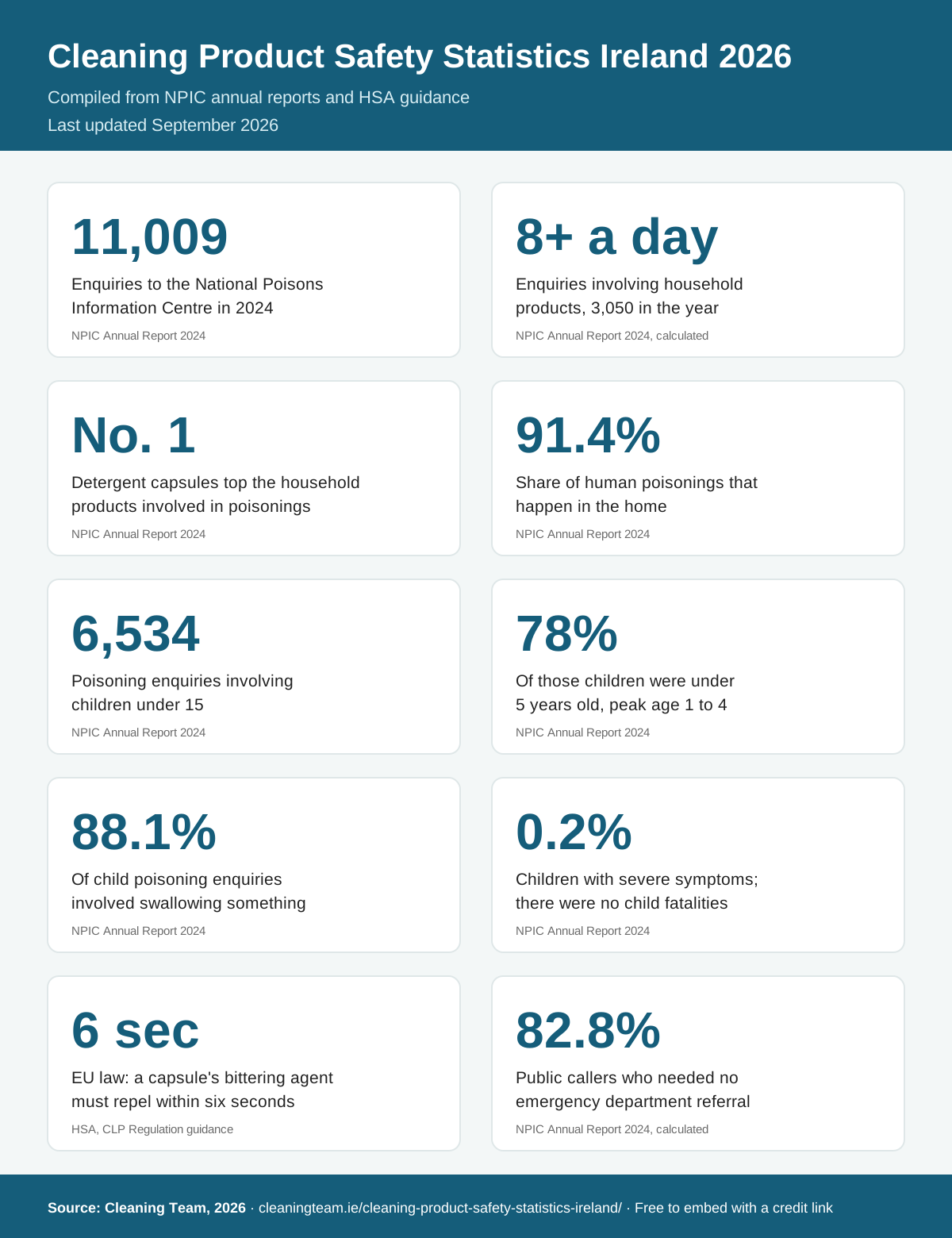
- The National Poisons Information Centre received 11,009 enquiries in 2024, up from 10,805 in 2023. Sources: NPIC Annual Report 2024 and NPIC Annual Report 2023
- 3,050 enquiries in 2024 involved household products, which works out at more than eight a day, calculated from the annual figure. Source: NPIC Annual Report 2024
- Household products such as fabric detergent capsules and multipurpose cleaners made up 17.2% of the 17,717 agents involved in human poisonings. Source: NPIC Annual Report 2024
- Fabric cleaning liquid detergent capsules were the most common household product in poisoning cases, and one of only two household items in the national top 10 agents alongside bleach. Source: NPIC Annual Report 2024
- 91.4% of human poisonings in Ireland happened in the home or a domestic setting, 9,829 cases in one year. Source: NPIC Annual Report 2024
- 6,534 poisoning enquiries involved children under 15, and 78% of those children were under 5 years old. Source: NPIC Annual Report 2024
- 97% of child poisoning enquiries happened at home, and 88.1% involved swallowing something. Source: NPIC Annual Report 2024
- There were no child fatalities, and only 0.2% of children had severe symptoms when the NPIC was contacted. Source: NPIC Annual Report 2024
- EU packaging law requires every detergent capsule to contain a bittering agent that makes it repulsive within 6 seconds of being put in the mouth. Source: Health and Safety Authority
- 66.8% of poisoning patients had no symptoms at the time their case reached the NPIC, and most public callers did not need a hospital visit. Source: NPIC Annual Report 2024
How Often Cleaning Products Poison People in Ireland
The National Poisons Information Centre at Beaumont Hospital is Ireland's reference point for poisoning, and its caseload is steady and large. The centre received 11,009 enquiries in 2024, of which 10,756 related to human poisoning cases, according to the NPIC Annual Report 2024. That was up from 10,805 total enquiries in 2023, an increase of 1.9%, calculated against the NPIC Annual Report 2023. Spread across the year, that is one poisoning enquiry roughly every 48 minutes, calculated from the annual total. Most poisonings happened where the cleaning products live: 91.4% of cases, 9,829 in the year, occurred in the home or a domestic setting, and 6,516 enquiries were accidental or unintentional poisonings.
Cleaning and household products are a consistent share of that caseload. 3,050 enquiries in 2024 involved household products, almost identical to the 3,051 recorded in 2023, which works out at more than eight enquiries every day of the year, calculated from the annual figure. Measured by the substances involved, household products accounted for 17.2% of the 17,717 agents in human poisoning cases, the second largest category after medications at 56.4% and ahead of chemicals at 14.5%, a category that itself includes alcohols, corrosive substances, essential oils and hydrocarbons, many of them cleaning related.
The circumstances behind the calls follow a consistent pattern. Accidental and unintentional poisonings were the largest group at 6,516 enquiries, followed by 2,351 therapeutic errors with medications, 1,236 intentional overdoses and 250 recreational exposures, per the same report. The NPIC's public access line operates every day from 8am to 10pm, and members of the public made 6,067 of the year's enquiries, 55.1% of the total, with 75.9% of public calls concerning accidental exposures. The number is 01 809 2166, verified on poisons.ie, and it belongs on the inside of every cleaning cupboard door in the country.
The home is not the only setting. Beyond the 9,829 domestic cases, 237 poisonings occurred in nursing, care or residential facilities, 172 in an occupational setting, and 109 in schools and creches, according to the same report's incident location table. Every one of those settings stores cleaning chemicals at scale, which is why commercial cleaning contracts and workplace chemical storage policies matter as much as the childproof latch at home. Agricultural and garden products added a further 233 enquiries, 38% of them about herbicides.
The Cleaning Products Involved Most Often
The NPIC names the same products year after year. The most common household products in 2024 poisoning enquiries were fabric cleaning liquid detergent capsules, disinfectants, antiseptics and sanitisers, dishwasher tablets, hand sanitiser, bleach and air freshener reed diffusers, according to the NPIC Annual Report 2024. Detergent capsules top that list, and their reach goes further: fabric cleaning capsules and sodium hypochlorite, the active ingredient in household bleach, were the only two household products in the national top 10 poisoning agents for 2024, a list otherwise made up of medications such as paracetamol and ibuprofen plus ethanol.
The pattern is intuitive once stated: the highest risk cleaning products are the ones that look edible or sit within reach. Capsules are small, colourful and soft; dishwasher tablets look like sweets; reed diffusers are open liquid containers left at nose height. The NPIC considered capsule exposures serious enough to commence a dedicated two year research study on paediatric liquid detergent capsule exposures in May 2024, per the same report.
Children and Cleaning Products
Children carry most of the risk. 6,534 poisoning enquiries in 2024, 60.8% of all human cases, involved children under 15 years of age, and 5,099 of those, 78%, involved children under 5, with the peak at ages 1 to 4, according to the NPIC Annual Report 2024. 97% of child poisoning enquiries occurred in the home or a domestic setting, 77% were accidental, and 88.1% involved ingestion. The remainder is not trivial: eye contact accounted for 115 child enquiries, inhalation for 93 and skin contact for 85, which together is 293 cases, or almost one child a day exposed through a splash, fume or spill rather than a swallow, calculated from the report's exposure route table.
The reassuring side of the same data is how rarely these incidents turn dangerous when handled quickly. 80% of children were asymptomatic when the NPIC was contacted, 19% had minor or moderate symptoms such as nausea, vomiting or a mild skin reaction, only 0.2% had severe symptoms, and there were no child fatalities in 2024. The practical lesson from the numbers is to call the NPIC public line first rather than defaulting to the emergency department, and to store anything scented, coloured or capsule shaped up high and out of sight.
How Serious These Poisonings Are
Across all ages, 66.8% of poisoning patients had no symptoms at the time the NPIC was contacted, 24.9% had minor signs such as mild stomach upset or skin irritation, 4.9% had moderate symptoms and 1.8% had severe symptoms, according to the NPIC Annual Report 2024. Members of the public made 6,067 enquiries, 55.1% of the total, and 74.3% of those calls involved a child of 15 or under.
The service keeps most of these cases out of hospital. Of the public callers, 17.2% were referred to an emergency department and 4.5% to a GP, meaning 82.8% did not need an emergency department referral, calculated from the same report. 18.8% needed no medical treatment at all, and a further 24.3% were simply advised to watch for symptoms. For a family facing a swallowed capsule or a splash of bleach, one phone call to the poisons line resolves the majority of incidents at home.
The small number of serious cases show what is at stake when it goes wrong. The NPIC followed up 193 cases in 2024 because of the severity, potential severity or unusual nature of the symptoms: 101 of those patients recovered completely, 58 developed short term complications such as aspiration pneumonia, renal impairment and caustic injury, and fewer than five had permanent effects, according to the NPIC Annual Report 2024. Caustic injury is the signature harm of concentrated cleaning chemicals, which is exactly what the capsule packaging rules described below were written to prevent.
The Packaging Rules That Exist Because of Capsules
Detergent capsules are the only cleaning product with EU packaging law written specifically for them. After a wave of child exposures across Europe, the CLP Regulation was amended in 2014 to add safety requirements for liquid capsules in soluble packaging, set out in Article 35(2) and Annex II of CLP, as summarised by the Health and Safety Authority.
| Requirement | What the law demands |
|---|---|
| Outer packaging | Opaque, self standing, easily reclosable, marked "Keep out of reach of children" |
| Closure | Must impede a young child, requiring two coordinated hands and adult strength to open |
| Bittering agent | Each capsule must contain an aversive agent that makes it repulsive in the mouth within 6 seconds |
| Capsule integrity | Must hold its liquid for at least 30 seconds in water at 20 degrees and resist a mechanical strength test of at least 300N |
The HSA's storage advice sits on top of the law: keep all detergent products out of the reach and sight of children, keep capsules in their original container, fully closed when not in use, and never hand a capsule to a child. The rules explain why the NPIC's child outcomes stay mild in the great majority of cases even as enquiry volumes hold above 3,000 a year.
Safer Cleaning at Home
Product choice changes the risk profile of a cleaning cupboard. Disinfectants, antiseptics and sanitisers sit near the top of the NPIC's household product list, and the mixing of products is its own hazard, particularly bleach with anything acidic. Households that switch part of their routine to milder products reduce what a curious toddler can reach, and our comparison of eco friendly versus traditional cleaning weighs that trade off honestly. Two products on the NPIC's top household list deserve particular care: hand sanitiser, which is high strength alcohol in a bottle children see adults use constantly, and reed diffusers, which are open containers of scented liquid that read as harmless decor. Both belong as far out of reach as the bleach. The wider household picture, from what Irish homes spend on cleaning products to who does the cleaning, is covered with full sources on our cleaning and housework statistics for Ireland page.
Method and Sources
Every statistic on this page was verified against its named source on 15 September 2026. The sources are the National Poisons Information Centre Annual Reports for 2024 and 2023, read in full, and the Health and Safety Authority's guidance on liquid laundry detergent capsules for the CLP packaging requirements. Three figures are calculated and labelled in the text: the 1.9% year on year rise in enquiries, the more than eight household product enquiries per day, and the 82.8% of public callers not referred to an emergency department. The NPIC publishes its annual report each December, and this page will be refreshed when the 2025 report appears; the capsule research study commenced in May 2024 is due to conclude in 2026 and will be added when published.
How Cleaning Team Helps
Cleaning Team provides professional house cleaning and eco friendly cleaning across Dublin, Kildare, Meath and Wicklow, using products handled by trained cleaners and taken away when we leave, which keeps hazardous product handling out of busy family homes. If you would rather not manage a cupboard of chemicals around small children, contact us for a quote or book online in a few minutes.